

How AI Improves Lead Magnet Conversion Rates
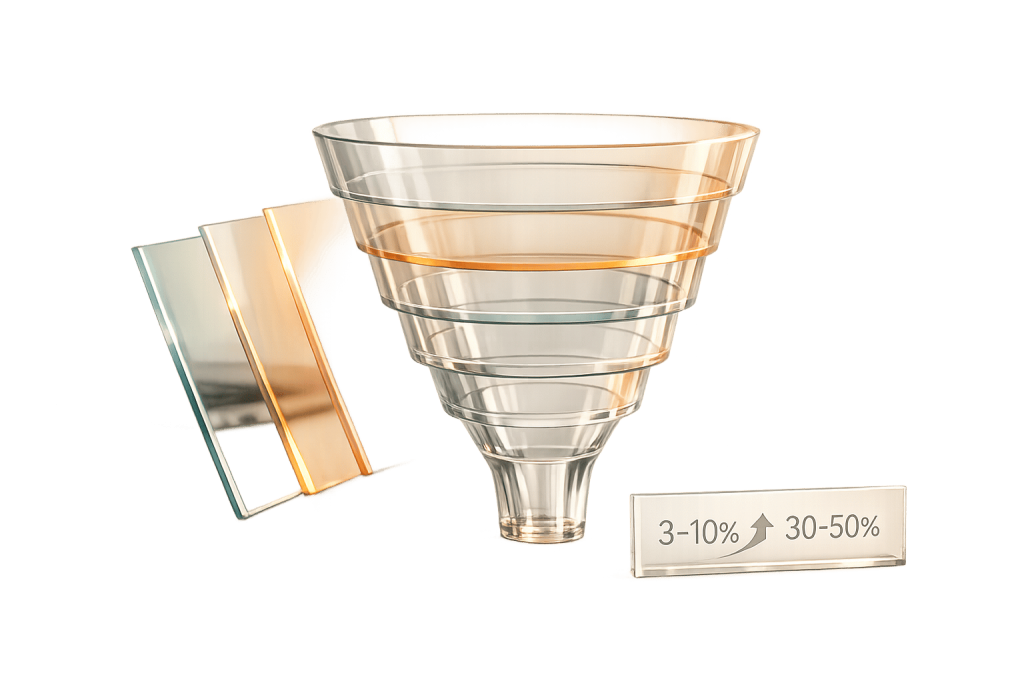
AI is reshaping how businesses generate leads by turning static content into dynamic, interactive experiences. Traditional PDF lead magnets convert at just 3–10%, but AI-powered tools like quizzes and chatbots can boost conversion rates to 30–50%. By analyzing user behavior in real time, AI personalizes content, qualifies leads, and improves performance continuously.
Key takeaways:
- Higher conversion rates: AI tools predict and adapt to user needs, driving engagement.
- Personalized experiences: AI customizes lead magnets based on user behavior, increasing relevance.
- Automated lead scoring: AI evaluates and segments leads to prioritize high-potential prospects.
- Continuous optimization: Machine learning refines strategies without manual intervention.
Platforms like Subpage.co make it easy to create AI-powered lead magnets, offering features like mobile responsiveness, analytics, and CRM integration for just $9.99 per organization per month. By exploring various lead magnet ideas, companies can find the right format for their audience. AI isn’t just improving lead magnets – it’s transforming how businesses connect with prospects.
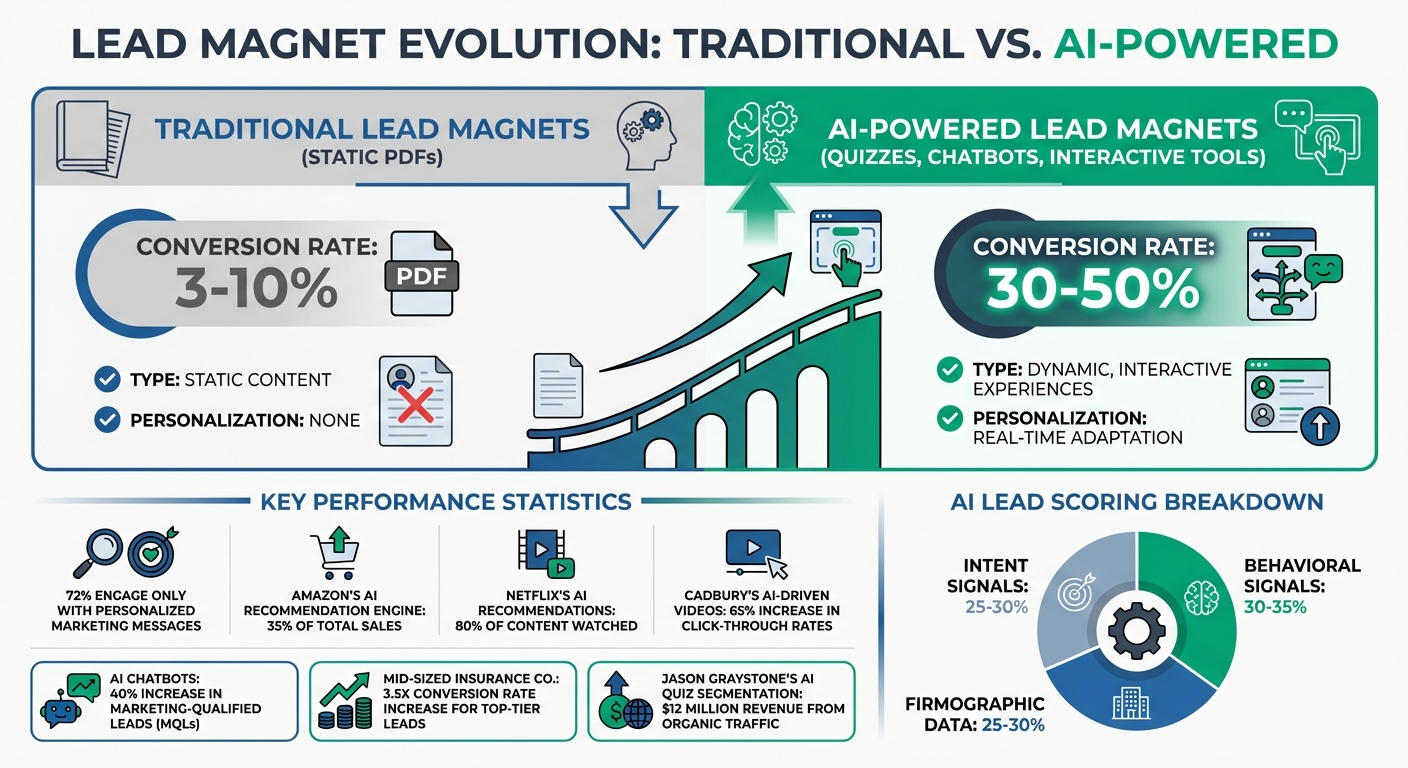
AI-Powered vs Traditional Lead Magnets: Conversion Rate Comparison
AI Lead Magnets: Step-by-Step Tutorial
Personalizing Content with AI
The difference between a lead magnet that converts and one that gets overlooked comes down to one thing: relevance. AI enables you to deliver exactly what each visitor is looking for, right when they need it.
How AI Tailors Content to Users
AI works by analyzing behavioral signals in real time – things like visited pages, time spent on-site, clicks, and browsing history. This allows it to understand a visitor’s intent and instantly adapt the content they see.
For example, when someone visits your website, AI evaluates their activity and customizes the lead magnet on the fly. Tools like interactive quizzes, smart forms with conditional logic, and AI chatbots that ask qualifying questions adjust dynamically based on user input. In the B2B space, AI can even scrape a provided URL to generate a personalized audit or improvement plan in seconds. Generative AI takes this a step further by tweaking headlines, calls-to-action, and main content to align with a visitor’s specific pain points.
Here’s why this matters: 72% of customers engage only with marketing messages tailored to their interests. Companies like Amazon and Netflix are prime examples of how personalization drives success. Amazon’s recommendation engine, powered by behavioral AI, is responsible for about 35% of their total sales. Netflix, on the other hand, uses real-time AI to recommend content, influencing nearly 80% of what users watch.
This ability to deliver hyper-relevant content not only improves user experience but also boosts the chances of conversion.
Why Personalization Increases Conversions
When users feel understood, they’re more likely to trust your brand. Effective lead magnets address their unique challenges, creating a deeper connection. That’s why interactive quiz landing pages see conversion rates of 30-50%, compared to just 3-10% for static PDFs. Cadbury, for instance, saw a 65% increase in click-through rates by using AI-driven personalized videos. Similarly, AI chatbots have been shown to increase marketing-qualified leads (MQLs) by 40%.
Real-time customization turns static offers into dynamic, user-focused experiences. These tailored interactions not only meet user expectations but also provide valuable insights into what your audience cares about, helping you refine your strategy even further.
AI for Lead Qualification and Scoring
AI doesn’t just personalize content – it also transforms how businesses manage leads by constantly updating lead scores based on real-time activity. Let’s face it: not every lead is ready to buy. AI evaluates a range of data points – like company size, job title, website visits, email interactions, and pricing page views – to estimate how likely a lead is to convert. Unlike traditional scoring systems that rely on fixed rules, AI adjusts scores dynamically as new interactions happen. This allows sales teams to act on high-intent signals immediately, cutting down delays that could cost opportunities.
The results? They speak for themselves. A mid-sized insurance company saw conversion rates jump 3.5x for top-tier leads and reduced time spent on low-quality prospects by 80%.
Automating Lead Scores
AI uses machine learning models like Gradient Boosting Classifiers and Random Forest to uncover patterns in historical data. Here’s how the scoring typically breaks down:
- Behavioral signals (e.g., website visits, content downloads) make up about 30–35% of the score.
- Firmographic data (e.g., industry, company size) accounts for 25–30%.
- Intent signals (e.g., demo requests, competitor research) contribute another 25–30%.
AI can spot nuanced patterns that humans might miss. For example, it might detect that a certain job title combined with rapid engagement often leads to successful deals. A lead who repeatedly visits your pricing page and downloads a case study could receive a much higher score than someone who simply opens an email.
Segmenting Leads for Better Follow-Up
Once AI assigns scores, it automatically categorizes leads into groups like Nurture, Marketing Qualified Lead (MQL), Sales Qualified Lead (SQL), or Hot Lead, based on specific thresholds. This ensures your pipeline stays up-to-date and your team focuses on the most promising prospects. For example, leads scoring between 0–30 might enter an educational email sequence, while those scoring 81 or higher trigger immediate sales outreach.
Take Jason Graystone, an investor and educator, as an example. He used an AI-powered quiz to segment leads into beginner, intermediate, and advanced categories:
By customizing follow-up sequences for each group, he generated over $12 million in revenue from organic YouTube traffic.
As leads take further actions – like revisiting your pricing page or requesting a demo – they’re automatically moved into more sales-ready segments. This process eliminates the need for manual updates and ensures your sales team is always focused on the leads most likely to convert.
sbb-itb-b3a7196
Continuous Improvement with Machine Learning
Machine learning takes lead magnet optimization to a whole new level by making continuous, automated adjustments based on real-time user behavior. Unlike traditional manual A/B testing, these systems work tirelessly, analyzing performance and adapting without any human intervention.
Tracking Performance Metrics
AI doesn’t just stick to tracking basic metrics like conversion rates. It dives deeper, monitoring detailed micro-interactions such as hovering over a CTA, focusing on specific form fields, or even error messages users encounter. For example, if visitors frequently abandon a lead magnet after interacting with a particular form field, the system flags that as a problem. Real-time drop-off analysis can uncover patterns that might take weeks for a human to notice.
Machine learning also predicts what resonates with different visitor segments by analyzing historical data. This means it doesn’t just tell you that something isn’t working – it helps you understand why and who it’s not working for. These insights lead to immediate, data-driven adjustments that are both precise and impactful.
Automatic Testing and Optimization
Machine learning doesn’t stop at identifying problems; it actively solves them. Instead of evenly splitting traffic across variations, it uses advanced strategies like multi-armed bandit algorithms (e.g., Thompson Sampling) to shift more traffic toward better-performing versions faster. This reduces the risk of wasting too much traffic on underperforming options.
"The next 20–40% lift won’t come from more A/Bs; it will come from AI conversion optimization – using predictive models, causal inference, and automation."
- Eggknite
For example, if the data reveals that replacing a "Book a Consultation" call-to-action with "Start Free Trial" boosts conversions for a specific audience, the system makes that change automatically. As new data flows in, the machine learning models keep updating, fine-tuning thresholds, and learning from fresh behaviors. This ensures your lead magnets adapt to shifting user preferences and market dynamics over time. It’s like having a system that evolves alongside your audience, keeping your strategy sharp and effective.
Using Subpage.co for AI-Powered Lead Magnet Optimization
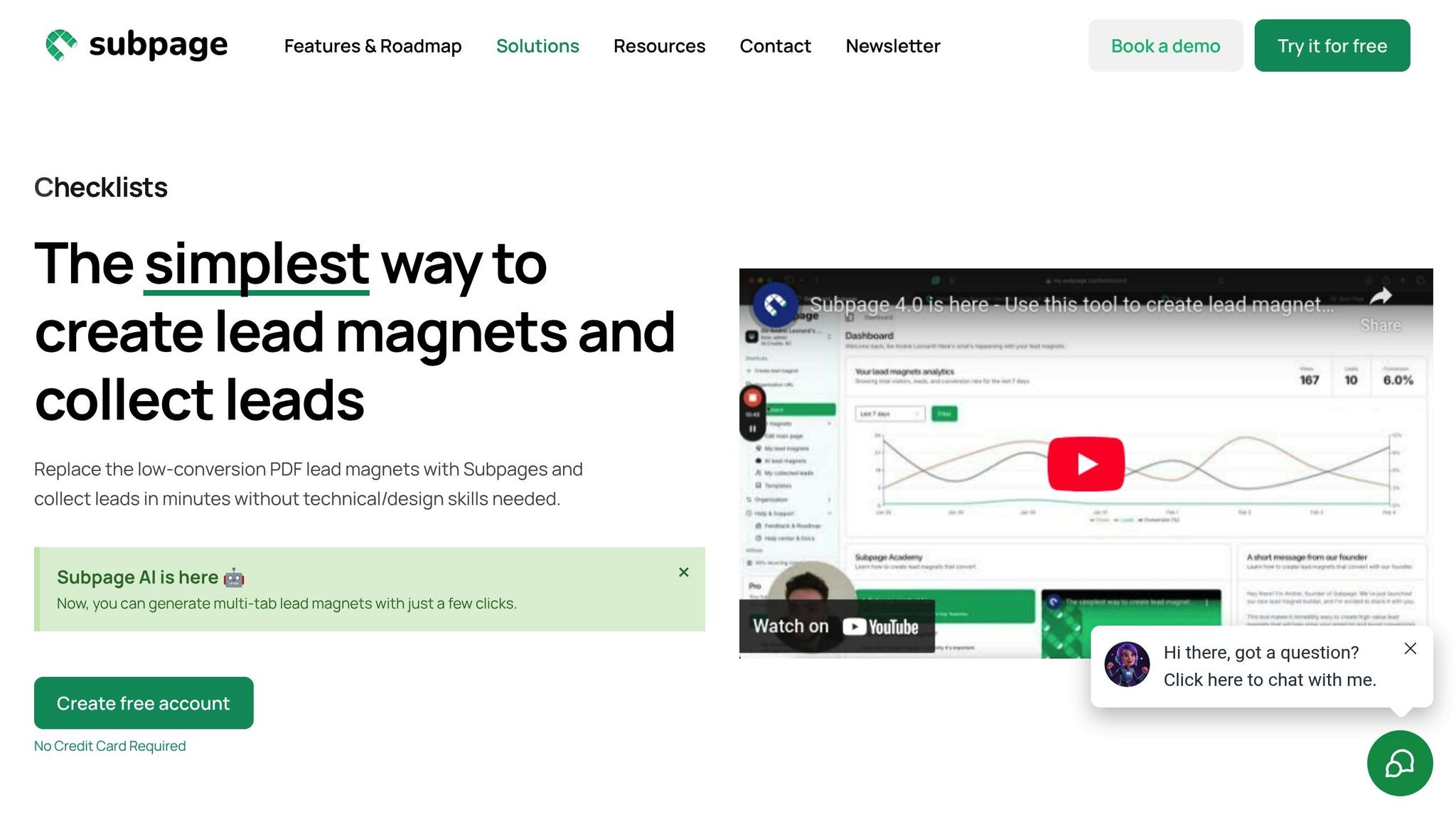
Subpage.co takes the concept of AI-driven lead personalization and qualification to the next level by focusing on optimizing lead magnets. It replaces outdated, low-performing PDF lead magnets with interactive, easy-to-create Subpages – all without requiring coding or design skills. With Subpage.co, you can create engaging lead magnets in just minutes, showcasing how AI is reshaping traditional approaches to lead generation.
Creating Lead Magnets with Subpage.co
The platform features a simple, user-friendly editor that allows you to copy content directly from Google Docs. For example, AhayahAssemblyChurch connected the domain "resources.ahayah.com" in a single evening, hosting free content across 150 websites. Subpage AI makes it easy to create multi-tab lead magnets with just a few clicks. Users have already built interactive business cases and gated video tutorials, utilizing flexible gating options like forms, pop-ups, and top bars.
Using AI Features to Improve Performance
Subpage.co’s AI tools ensure that all lead magnets are automatically mobile-responsive – an essential feature given the prevalence of mobile browsing. The platform also offers email validation and detailed analytics. In one case, Subpage users successfully generated over 1,000 leads in just two weeks.
"This is the FASTEST that I have ever set up a lead capture page! Literally a few clicks and the page was live." – Sumoling_Number_1
For $9.99 per organization per month, the Premium plan unlocks unlimited lead magnets, full analytics access, custom branding, and domain linking. These features make it easier to manage leads effectively and create a seamless, professional experience.
Connecting with Third-Party Tools
Subpage integrates with tools like Zapier, webhooks, and automation platforms such as Active Pieces, streamlining lead collection and follow-up. When someone interacts with your content gate, their information is automatically sent to your CRM or email marketing platform for immediate nurturing. For instance, one user, Miggy, successfully integrated Subpage with Active Pieces using webhooks, stating:
"the JSON received is neat and intuitive"
Subpage also allows you to embed interactive elements like WhatsApp buttons for real-time communication and export leads via CSV. The Free plan includes five lead magnets and seven-day analytics, while the Premium plan, priced at $9.99 per organization per month, offers unlimited lead magnets, full analytics, custom branding, and seamless domain linking.
Conclusion
AI is changing the game for lead magnets. Tools like quizzes and calculators now see conversion rates between 30–50%, compared to the 3–10% range typical for static PDFs. These interactive tools provide instant, personalized recommendations that build trust and encourage users to share their contact details.
From crafting tailored content to automating lead qualification, AI is reshaping every stage of the lead generation process. The advantages are compelling: personalization that makes visitors feel genuinely understood, automated lead qualification to segment prospects by their real needs, and ongoing improvements through machine learning that refine performance over time. Beyond better metrics, AI also delivers deeper insights – collecting data on pain points, goals, and budgets that sales teams can leverage effectively.
"The future belongs to the marketers who will use AI to scale personalization, protect customer trust, and keep their human edge." – Daniel Priestley, Cofounder, ScoreApp
Platforms like Subpage.co make these AI capabilities accessible with intuitive tools and robust analytics. Their mobile-friendly design and flexible gating options ensure lead magnets perform seamlessly across all devices.
Blend AI’s efficiency with your expertise to get the best results. Start small – try one interactive feature, measure its success, and build from there. AI-powered lead magnets can redefine engagement and deliver lasting impact.
FAQs
How can AI help personalize lead magnets to boost conversion rates?
AI takes lead magnet personalization to the next level by analyzing user data like preferences, browsing habits, and shared information. This enables the creation of content that’s finely tuned to individual needs, increasing the chances of user engagement and conversion.
For instance, AI can tweak the messaging, format, or recommendations within a lead magnet in real time to align with a user’s specific interests. By offering content that feels uniquely tailored, businesses can boost conversion rates and foster deeper connections with their audience.
How does AI help improve lead scoring and qualification?
AI takes lead scoring and qualification to a new level by processing massive amounts of data to pinpoint high-value leads with precision – often hitting accuracy rates above 98%. This means sales teams can zero in on the most promising prospects, making their efforts more focused and boosting conversion rates by as much as 25%.
On top of that, AI helps cut the cost per lead by approximately 15% while improving lead quality. By analyzing behavioral patterns, intent signals, and firmographic details, it provides deeper insights that streamline the sales process. The result? Businesses can achieve stronger outcomes with less effort.
How does AI help improve lead magnet performance over time?
AI takes lead magnet performance to the next level by analyzing user behavior, engagement trends, and preferences. With this treasure trove of data, it can fine-tune and personalize content, making it more relevant and appealing to your audience. The result? A higher chance of turning visitors into leads.
What’s more, AI doesn’t stop there. It keeps learning from every user interaction, ensuring your lead magnets stay in sync with your audience’s changing needs. This ongoing optimization helps you achieve better results while cutting down on manual work.
Related Blog Posts
