Lead Magnet Funnel: Assemble the Whole Path (Not One Stage)
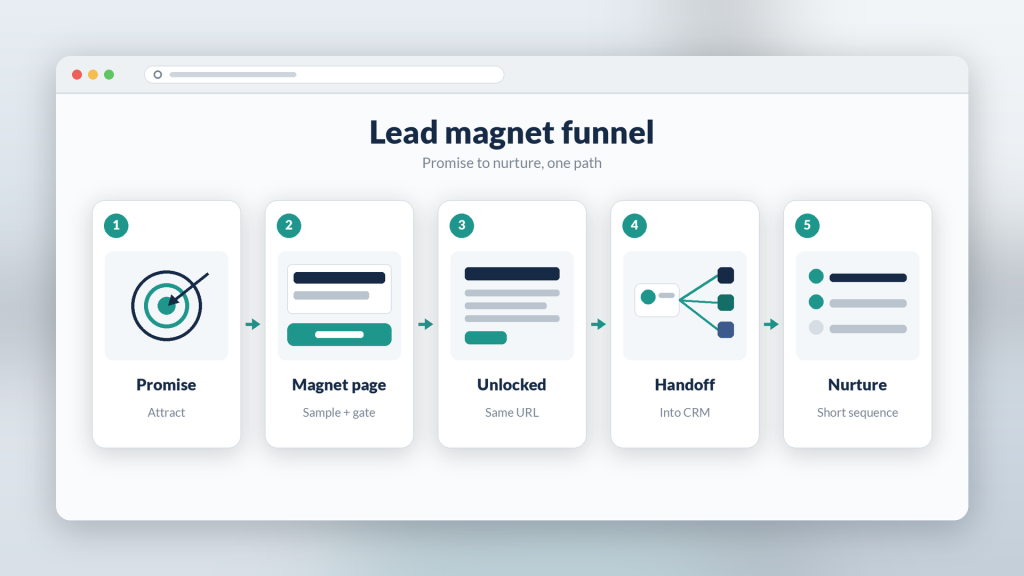
A lead magnet funnel is the full path from attention to a nurtured contact — not a lonely download button. Promise and traffic open the top; a hosted gated page captures the middle; unlocked content, CRM handoff, and a short nurture close the loop. When any stage is missing, even a polished asset can struggle to convert (see why lead magnets aren’t converting).
Subpage is a no-code gated lead magnet builder for that mid-funnel page — sample plus gate on one branded URL. It is not a full website builder or your CRM. Pair it with the traffic and automation you already run.
What a lead magnet funnel is (and is not)
Here, funnel means a gated content funnel: attract people who want one outcome, exchange a short form for that outcome, then move the lead into email or CRM so nurture can start. It is not a website rebuild, and it is not “paste a PDF into Drive and hope the form still points there next month.”
A content upgrade is often a mid-article magnet — a traffic wedge inside the same logic. A webinar can sit later as an optional upsell; it is not required for a first funnel.
Funnel stages to assemble
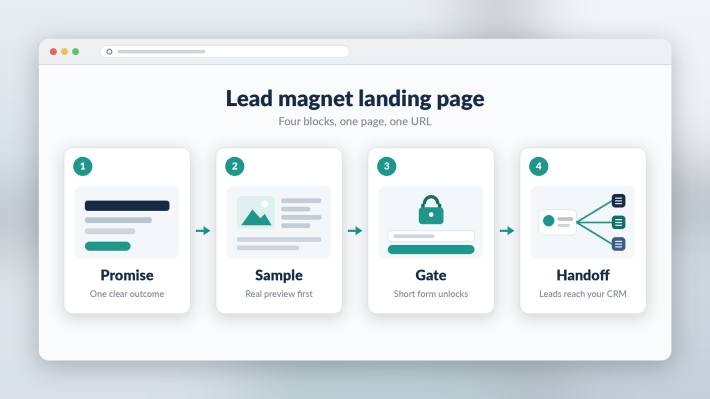
1. Promise / attract. One outcome, one audience, one primary channel. Traffic without a clear promise tends to bring in contacts who were never a fit. Agencies often reuse one promise pattern via the lead magnet tool for agencies workflow.
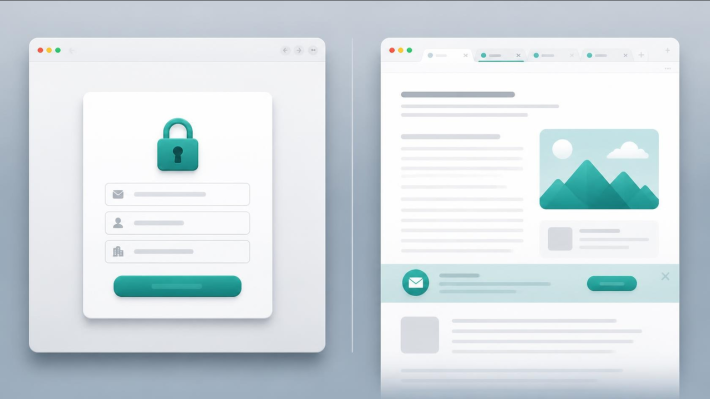
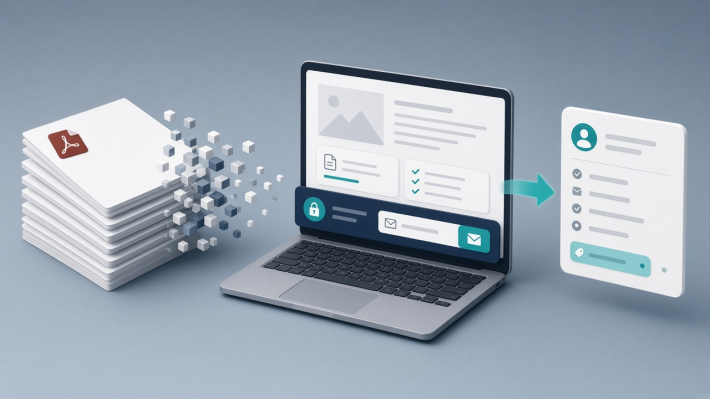
2. Magnet page (sample + gate). Prove the asset is real, then gate the rest. Shorter offers ship as a checklist lead magnet; denser research may use an interactive whitepaper lead magnet. Prefer a PDF lead magnet alternative when you need an updateable hosted page. Choose one of the four gate types for the page — see soft gate vs hard gate for how much to lock. Keep fields short — see how to simplify lead collection forms.
3. Unlocked. After submit, the content unlocks in place on the same URL, and a return visit in the same session loads already unlocked. A Gated File or Gated Link block can hold the download itself. If you want a next action, offer one inside the unlocked content — not a homepage with five competing CTAs.
4. CRM / email handoff. Contacts must leave the magnet tool for the system of record. Plan CRM lead handoff — Zapier, webhook, ActivePieces, or export — before you buy traffic.
5. Nurture (brief). A short sequence that delivers the promise, then invites the next conversation. The magnet tool feeds your ESP; it does not replace it.
Lead magnet funnel examples
- SEO hybrid: Ungated intro for crawlability (gated content SEO best practices), gate on the deeper asset, handoff to CRM, nurture with the guide.
- Agency client pack: Branded magnet page per client, shared gate pattern, webhook into the client’s CRM.
- Practitioner content upgrade: Blog attracts; hosted gate captures; the unlocked content offers a related template; ESP continues.
These are lead magnet funnel examples you can ship in a week — not enterprise automation diagrams.
How to create a lead magnet funnel this week
- Write the promise in one sentence (outcome + audience).
- Build the hosted page body yourself — do not lean on flaky Files/URL AI to invent the teaser.
- Set sample + gate; keep the form minimal.
- Write the unlocked content, with one optional next step inside it.
- Connect lead magnet to CRM (or ESP); submit a test lead; confirm fields land.
- Draft a 3–5 email nurture that delivers value before the hard sell.
That is a no-code lead magnet funnel: valuable page + flexible gate + brand + handoff. For tooling context, see best no-code tools for lead magnet creation. Practitioners need one clean path; agencies repeat the same assembly per client. Subpage wins the mid-funnel page; your CRM and ESP own the rest.
What Subpage users say
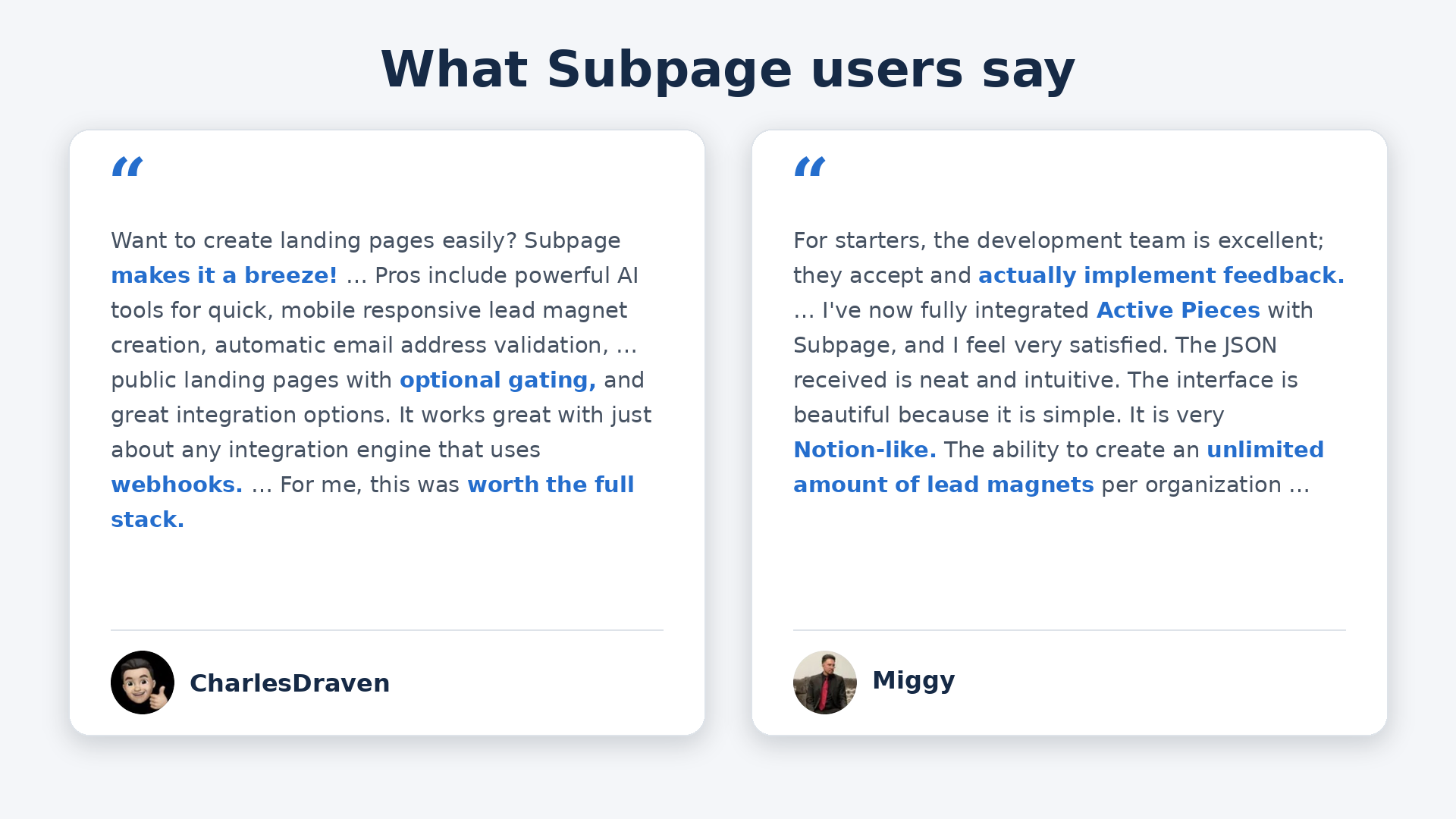
CharlesDraven: “Want to create landing pages easily? Subpage makes it a breeze!” He highlights AI tools, automatic email validation, optional gating, and integration options: “It works great with just about any integration engine that uses webhooks.” His verdict: “For me, this was worth the full stack.”
Miggy: After his feedback, the development team added a webhooks integration in less than a week: “I’ve now fully integrated Active Pieces with Subpage, and I feel very satisfied.” He also calls the interface “very Notion-like” and values “the ability to create an unlimited amount of lead magnets per organization.”
Bottom line
A working lead magnet funnel is end-to-end assembly: promise and traffic, a hosted magnet page with sample and gate, unlocked content on the same URL, CRM/email handoff, and a short nurture. Hosted gated pages beat PDF+form mashups because the mid-funnel URL stays revisable after publish.
Start free on the pricing plans that fit, then ship one complete funnel path before you scale ads or SEO experiments.
FAQ
What is a lead magnet funnel? The full path from attention to a nurtured contact: attract with one promise, capture on a gated magnet page, unlock the content in place, hand the lead into CRM or email, then nurture. The magnet page is the mid-funnel — not the whole business.
How do you create a lead magnet funnel without rebuilding a website? Host the magnet as a branded gated page, keep sample and gate on one URL, wire webhook/Zapier/export into your existing CRM or ESP, and run nurture there.
What are good lead magnet funnel examples for agencies? A reusable promise pattern, a client-branded hosted gate, unlocked content with one next step inside it, and webhook handoff into each client’s CRM — plus a short nurture the client owns.